Last updated 2026-08-14
TL;DR
A booster club running a 50/50 raffle tied to Peoria Chiefs games needs an Illinois raffle license (through the local unit of government where tickets sell), a separate cash log for pot and prize payouts, and correct reporting on Form 990 or 990-N. The raffle itself doesn't threaten tax-exempt status; sloppy recordkeeping and missing filings do.
What is a 50/50 raffle and why do Peoria Chiefs booster clubs run them?
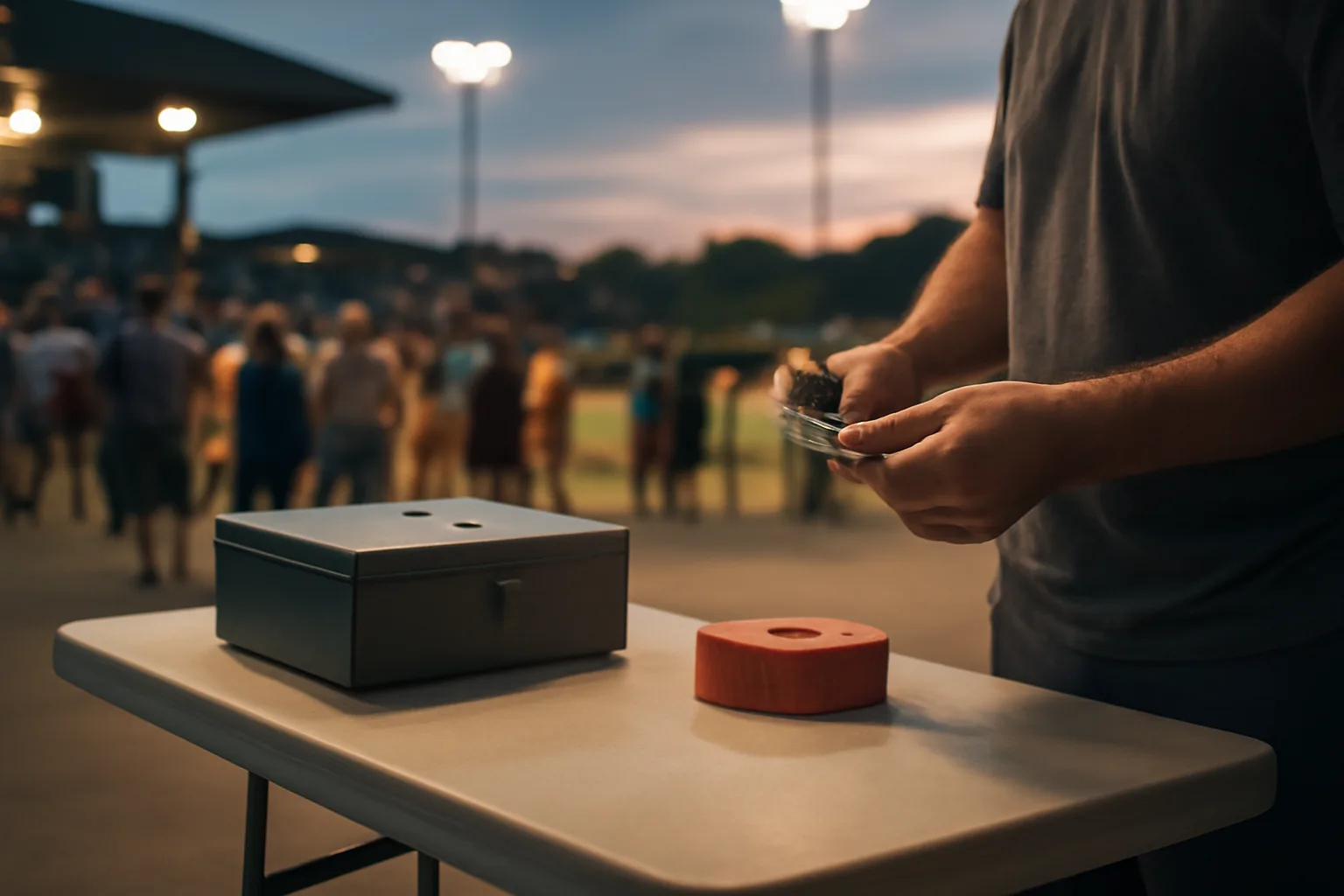
A 50/50 raffle is the simplest fundraiser in sports: fans buy tickets during a game, half the pot goes to a winner, half goes to the booster club. At a Peoria Chiefs game, that means a booth or roaming sellers near the concourse, a drawing announced between innings, and cash changing hands fast, in small bills, all night. Booster clubs like this format because it's low-friction. No raffle wheel, no complicated prize sourcing, no printing costs beyond a roll of tickets. The catch is that a raffle is still a form of gambling under state law, even when a nonprofit runs it for a good cause. Illinois treats raffles as regulated gaming, which means a booster club can't just show up with a ticket roll and a bucket. It needs a license first. The Illinois Raffles and Poker Runs Act is the actual law here, and it hands licensing authority to local government, not the state gaming board directly. Under the Act, a county board or the corporate authorities of any municipality may license eligible organizations to conduct raffles within their jurisdiction [1]. That means the booster club applies to the city of Peoria or Peoria County, not to a state agency, and the license only covers raffles run inside that jurisdiction's boundaries. If your booster club sells 50/50 tickets both at Peoria Chiefs home games (Peoria, in Peoria County) and at away tournaments in another county, you may need more than one license. Confirm the boundary and reciprocity question with your local licensing authority and your state charity office before selling a single ticket outside your home jurisdiction.
Do you need a license to run a 50/50 raffle for a booster club?
Yes. In Illinois, a nonprofit needs a raffle license from the local unit of government, plus underlying eligibility as a nonprofit organization, before it can lawfully sell 50/50 tickets. There is no statewide raffle license that covers every city and county at once. The Illinois Raffles and Poker Runs Act defines who qualifies as an eligible organization, generally requiring the group to be a bona fide religious, charitable, labor, business, fraternal, educational, or veterans' organization, or a nonprofit fundraising arm of one, that has existed for a set period before applying [1]. A brand-new booster club formed the week before opening day may not qualify yet. Check your specific unit's ordinance for the minimum organizational age requirement, since local ordinances can add conditions on top of the state law. The application typically goes to the city clerk's office (for raffles inside city limits) or the county clerk (for unincorporated areas), and it usually asks for the group's nonprofit documentation, the names of people handling the money, the dates and locations of the raffle, and sometimes a small license fee. Fees and exact paperwork vary by municipality, so confirm current fees and forms with the city of Peoria's licensing office or Peoria County directly rather than assuming a number here. One detail that trips up first-time treasurers: the license is tied to a specific organization and specific raffle occasions, not a blanket permission to run raffles forever. If your booster club runs a 50/50 raffle at every home game across a full season, ask the licensing authority whether that requires a single season-long license or a license renewal per event. Local practice varies, and this is exactly the kind of thing a phone call to the clerk's office resolves in five minutes, versus guessing and getting it wrong.
What records does a treasurer need to keep for a raffle like this?
At minimum: a ticket log, a cash reconciliation sheet for each game, and a winner record with the payout amount and the winner's name and contact information for anything over the withholding threshold. Here's the reality of running a 50/50 at a minor league ballpark. Cash comes in fast, in fives and ones, from hundreds of small transactions. That's exactly the environment where money goes missing without anyone stealing a thing, just through counting errors, unlogged comps, or a volunteer who forgot to turn in a stack of unsold tickets. The fix isn't complicated: two people count the cash box at the start of the night and two people count it at the end, every time, no exceptions. Write the numbers down and both people initial the sheet. For the drawing itself, record the winning ticket number, the payout amount, and get the winner's name, address, and signature on a receipt. The IRS requires withholding and reporting on gambling winnings above certain thresholds. As of current federal guidance, a payer must file Form W-2G for raffle winnings of $600 or more where the payout is at least 300 times the wager amount, and backup withholding rules can apply at higher thresholds; confirm the current dollar thresholds and withholding percentage with IRS Publication 3079, which covers gaming for exempt organizations, since these figures are the kind that get updated and you don't want to work from memory [2]. Keep every raffle's records separate from the club's general fundraising records for at least three years, which lines up with the IRS's general recommendation on supporting documentation for tax filings. If your state charity office (Illinois Attorney General's Charitable Trust Bureau, for statewide charitable registration questions) asks for raffle proceeds and expense detail during an audit or complaint review, you want it retrievable in an afternoon, not reconstructed from memory.
What is a treasurer, and what does a treasurer do?
A treasurer is the person responsible for a nonprofit's money: tracking what comes in, what goes out, keeping the records straight, and making sure the organization files what the IRS and state require, on time. For a booster club, that's the person who counts the raffle cash box, deposits it, pays vendors, and signs off on the numbers the board sees at every meeting. What does a treasurer do in practice, week to week? Reconcile the bank account against receipts. Log every cash fundraiser, including 50/50 raffles, in a way that separates gross revenue from expenses and payouts. Track the organization's federal EIN and whatever state filings apply (annual report, charitable registration renewal). Prepare, or hand off to a preparer, whatever version of Form 990 the club's revenue and asset levels require. What does a club treasurer do that's different from a corporate treasurer? Scale, mostly. A booster club treasurer is almost always a volunteer, often a parent with a full-time unrelated job, handling this on nights and weekends between concession stand shifts. The stakes hold up just as real, though: a lapsed 990 filing can auto-revoke the club's tax-exempt status just as easily for a $40,000-a-year booster club as for a $4 million nonprofit. For a fuller answer to what a treasurer of a club does across the whole calendar year, more than raffle season, see what does a treasurer do.
What is Form 990, and which version does a booster club file?
Form 990 is the annual information return the IRS requires from most tax-exempt organizations, reporting revenue, expenses, and activities for the year. Which version a booster club files depends on gross receipts and total assets, not on whether it ran a raffle. Organizations with gross receipts normally $50,000 or less can file the electronic postcard, Form 990-N, instead of a full return. The IRS states that most small tax-exempt organizations whose annual gross receipts are normally $50,000 or less are eligible to file the 990-N [3]. Cross that threshold and the club generally moves up to Form 990-EZ (gross receipts under $200,000 and total assets under $500,000) or the full Form 990 above those limits; confirm current thresholds directly on irs.gov since they're periodically reviewed. A 50/50 raffle's gross proceeds (more than the club's half) generally count toward gross receipts for purposes of this threshold, which surprises treasurers who assumed only their "keep" counted. Run a busy Peoria Chiefs season with strong raffle sales alongside concessions and sponsorship income, and a small club can cross the $50,000 line faster than expected, bumping it from the simple 990n filing into 990-EZ territory. For background on how the 990 tax form categories work and what counts toward gross receipts, that's worth reading before your first filing deadline, not after. Raffle income and expenses also need their own line items inside whatever version of the [990](/articles/treasurer-basics/990) or irs form 990 the club files, generally reported as gaming activity on Schedule G if gross gaming revenue exceeds $15,000 in the year. Check the current Schedule G threshold and instructions on irs.gov before you file, since exact reporting triggers can shift.
What happens if the booster club's tax-exempt status gets auto-revoked?
The IRS automatically revokes tax-exempt status for any organization that fails to file its required Form 990, 990-EZ, or 990-N for three consecutive years. This is not a warning system with a grace period; it's automatic, and it happens to small volunteer-run groups constantly. The IRS is explicit about this: organizations that fail to file for three consecutive years automatically lose their tax-exempt status, and this applies to most organizations that are required to file an annual return [4]. A booster club that skipped filings during a coaching change, a pandemic-era pause, or just because nobody realized the prior treasurer stopped filing, can find itself off the IRS Tax Exempt Organization Search with no warning letter that anyone actually saw. The practical fallout: donations made to the club during the revoked period may not be tax-deductible for donors, the club may owe income tax on revenue that would otherwise have been exempt, and any state charitable registration tied to federal exempt status can lapse too. For a group whose main income is a 50/50 raffle and concession stand sales, this can turn a straightforward fundraiser into a real financial and legal mess. Getting reinstated means filing Form 1023 or 1023-EZ (retroactive reinstatement application) along with the delinquent 990 filings, and there's often a reduced user fee path for organizations that apply within 15 months of the revocation date, under the streamlined retroactive reinstatement procedure described in Revenue Procedure 2014-11 [5]. Confirm current fees and eligibility on irs.gov since the IRS periodically updates the reinstatement procedures. Don't guess on this one. This is exactly the kind of filing where getting the sequence wrong (filing the wrong form first, or missing a delinquent-return requirement) costs months of delay.
Does running a 50/50 raffle put the club's tax-exempt status at risk?
Not by itself. Occasional raffles and similar gaming events are common, legal fundraising activity for 501(c)(3) and 501(c)(4) organizations, and the IRS doesn't treat a well-run raffle as a threat to exempt status. The risk isn't the raffle; it's what surrounds it. Unrelated business income tax (UBIT) can apply if gaming activity becomes a substantial, regularly carried-on trade or business unrelated to the club's exempt purpose, though the IRS provides specific exceptions for certain bingo games and volunteer-run activities. IRS Publication 3079, Tax-Exempt Organizations and Gaming, walks through when gaming income triggers UBIT and when it doesn't, and it's the single best free resource for a booster club treasurer trying to figure out whether raffle income needs to be reported as unrelated business income [2]. The bigger real-world risk is private inurement or excess benefit: if raffle proceeds end up benefiting a specific individual (say, funding only one family's travel costs) rather than the organization's exempt purpose broadly, that's a genuine problem under IRS rules for 501(c)(3) organizations, separate from any raffle-specific concern. Keep raffle proceeds flowing into the general booster club fund, spent on program needs for the whole team, and document that clearly.
How do you handle raffle winnings and IRS reporting for the winner?
If a 50/50 raffle payout hits IRS reporting thresholds, the booster club, as the payer, has to issue Form W-2G to the winner and file a copy with the IRS. This is a real administrative obligation, not an optional courtesy. Publication 3079 lays out the specific dollar and odds thresholds that trigger W-2G reporting and, in some cases, backup withholding at the flat rate the IRS specifies for gambling winnings [2]. Because a 50/50 raffle's payout is a direct percentage of ticket sales, a big game night with strong ticket sales can easily produce a pot that crosses the reporting threshold, even if most nights don't. Before the season starts, the treasurer or raffle chair should decide, in writing, who is responsible for collecting the winner's Social Security number or Tax ID for W-2G purposes, and what happens if a winner refuses to provide it (the IRS generally allows the payer to apply backup withholding in that case, and Publication 3079 covers the mechanics). Sort this out before opening night, not while a happy winner in line five is holding up the drawing waiting for a form nobody printed.
How is a raffle different from other booster club fundraisers, tax-wise?
| 50/50 raffle | Yes, typically a local raffle license (Illinois Raffles and Poker Runs Act) [1] | W-2G for qualifying winnings; Schedule G if gross gaming revenue tops the reporting threshold | |
|---|---|---|---|
| Silent auction | Generally no gaming license | Standard revenue reporting; donor acknowledgment rules for items over $75 | |
| Concession stand sales | Local health permit, not a gaming license | Standard revenue, no W-2G | |
| Bake sale | Usually none, though some states require a cottage food or health permit | Standard revenue reporting | A raffle is the only common booster club fundraiser that carries both a state gambling license requirement and an IRS gambling-winnings reporting obligation at the same time. That combination is exactly why treasurers get tripped up: they treat it like any other fundraiser and skip both the license application and the W-2G paperwork, and only find out something was required when a parent complains or an auditor asks. |
A raffle is legally a form of regulated gambling, which puts it in a different bucket than a bake sale or a car wash, both for state licensing and for IRS reporting. | Fundraiser type | State licensing required? | IRS reporting trigger |
What if the club already ran raffles without a license?
Stop selling tickets under the unlicensed arrangement, and get the license process started immediately with the city of Peoria or Peoria County clerk's office. Running a raffle without a required local license is a real legal exposure for the organization and, depending on how the local ordinance is written, potentially for the individuals who organized it. This happens more than anyone likes to admit. A parent takes over as treasurer mid-season, discovers the raffle license lapsed two years ago or was never applied for, and now has to decide whether to pause the fundraiser or push forward. The safe move is to pause, call the local licensing office, and ask directly what retroactive exposure exists and what they need to see to bring the club current. Local clerks deal with small nonprofits making this exact mistake regularly; a phone call explaining the situation honestly usually goes better than treasurers expect. While you're at it, check whether the club's IRS exempt status and state charitable registration are both current. It's common for one lapse (a missed 990-N, say) to go unnoticed for years precisely because nobody was tracking filings against a calendar. If your booster club is untangling several years of missed paperwork at once, a state-personalized treasurer kit that maps out the filing calendar specific to Illinois and your club's revenue tier can save real time versus piecing it together from scattered agency websites; that's the kind of first-90-days problem BoosterLedger's $99 kit is built to solve, though a careful volunteer with a checklist and a few afternoons can absolutely do this without buying anything.
What should a new treasurer check first before the next home game?
Before selling a single raffle ticket at the next Peoria Chiefs home game, confirm four things: the raffle license is current with the city or county, the cash-handling procedure has two-person counts built in, the club's IRS filing status shows active on the IRS Tax Exempt Organization Search tool, and someone specific owns the W-2G paperwork for the night. None of these take more than an hour to check, and all four are the kind of thing that seems fine until the exact night it isn't. Pull the prior year's raffle records and compare the license dates against the actual raffle dates run. Ask the outgoing treasurer, if there is one, for the last three years of 990 filings and check the dates against the calendar to make sure nothing was missed. Print a simple cash count sheet and W-2G log template before opening day, not the morning of. A first-time booster club treasurer inherits a lot at once: the books, the licenses, the filing calendar, sometimes a cash box with no documentation at all. Getting these four things checked early is the difference between a smooth season and a spring spent untangling a mess nobody meant to create.
Frequently asked questions
Does a Peoria Chiefs booster club need a state raffle license or a local one?
In Illinois, raffle licensing runs through local government, not a single state agency. Under the Illinois Raffles and Poker Runs Act, the corporate authorities of a municipality or a county board can license eligible organizations to run raffles within their jurisdiction. Confirm with the city of Peoria's clerk office or Peoria County directly, since requirements and fees vary by unit.
What is a treasurer?
A treasurer is the person accountable for an organization's money: tracking income and expenses, reconciling bank accounts, and making sure required filings (like Form 990) go in on time. In a booster club, the treasurer usually also owns cash-handling procedures for fundraisers like a 50/50 raffle.
What does a treasurer do day to day?
A treasurer reconciles the bank account, logs every deposit and expense, tracks fundraiser cash separately from general operating funds, prepares board financial reports, and manages the annual IRS filing (990-N, 990-EZ, or full 990) along with any state charitable registration renewal.
What does a club treasurer do that's different from other treasurer roles?
A club treasurer, like one for a booster club, handles the same core duties at smaller scale and usually as a volunteer. The stakes stay real though: missing three consecutive years of 990 filings triggers automatic IRS revocation regardless of the club's size or budget.
What is Form 990?
Form 990 is the annual information return most tax-exempt organizations file with the IRS, reporting revenue, expenses, and activities. Smaller organizations with gross receipts normally $50,000 or less can file the simpler Form 990-N instead of the full return.
What is the 990 tax form used for?
It gives the IRS and the public a picture of a nonprofit's finances and activities each year: how much it raised, what it spent money on, and whether it's operating consistent with its tax-exempt purpose. Filing it is required to maintain exempt status.
Does a 50/50 raffle count as gross receipts for the 990-N threshold?
Generally yes; total raffle ticket sales, more than the club's half of the pot, typically count toward gross receipts for purposes of the $50,000 990-N eligibility threshold. A strong raffle season can push a small club into 990-EZ filing territory. Confirm current thresholds on irs.gov.
What happens if a booster club misses its Form 990 filing for three years?
The IRS automatically revokes tax-exempt status after three consecutive years of missed required filings, per IRS guidance on automatic revocation. There's no warning grace period; the club has to apply for reinstatement, often via Form 1023 or 1023-EZ, and may owe back taxes on income earned during the lapse.
Do raffle winners get a tax form from the booster club?
If the winnings meet IRS reporting thresholds under Publication 3079's gaming rules, the club must issue Form W-2G to the winner and file a copy with the IRS. Backup withholding can apply if the winner won't provide a Social Security number or Tax ID.
Is running a raffle risky for a nonprofit's tax-exempt status?
Occasional raffles are common, legal fundraising and don't threaten exempt status on their own. Risk comes from unrelated business income tax exposure if gaming becomes a substantial regular business, or from proceeds benefiting one individual rather than the organization's exempt purpose broadly.
Can a brand-new booster club get a raffle license right away?
Maybe not immediately. Illinois's Raffles and Poker Runs Act requires an organization to qualify as an eligible nonprofit, and many local ordinances add a minimum time-in-existence requirement before a raffle license will be issued. Check the specific ordinance with your city or county clerk.
What records should a booster club keep for a raffle night?
A ticket sales log, a two-person cash count at start and end of the event, a winner record with payout amount and contact information for W-2G purposes, and a copy of the local raffle license. Keep these for at least three years, separate from general fundraising records.
Who applies for the raffle license, the booster club or an individual?
The organization applies, generally through whoever holds an officer role (often the president or treasurer), and the local clerk's office typically wants nonprofit documentation and the names of the people who will handle the money on file as part of the application.
Sources
- Illinois Compiled Statutes, Raffles and Poker Runs Act, 230 ILCS 15: Illinois raffle licensing runs through county or municipal government, and defines eligible organization requirements
- IRS Publication 3079, Tax-Exempt Organizations and Gaming: W-2G reporting thresholds, backup withholding, and UBIT rules for raffle and gaming income
- IRS, Annual Electronic Filing Requirement for Small Exempt Organizations (Form 990-N): Organizations with gross receipts normally $50,000 or less can file Form 990-N
- IRS, Automatic Revocation of Exemption: Tax-exempt status is automatically revoked after three consecutive years of missed required filings
- IRS Revenue Procedure 2014-11: Streamlined retroactive reinstatement procedures and reduced user fee path for organizations applying within 15 months of revocation
- IRS Tax Exempt Organization Search: Tool to confirm an organization's current federal exempt status